
Meet the Women of the Civil Rights Movement in Atlanta
Published March 19, 2026
Add Discover ATL as a preferred source on Google
Some were married to Civil Rights leaders; others joined — and led — the fight for civil rights in Atlanta and the nation on their own. Meet some of the Atlanta women who were leaders in the Civil Rights movement.
Juanita Abernathy

Juanita Abernathy was a formidable woman who worked as an educator and a Mary Kay Cosmetics saleswoman, served on the board of trustees for the Morehouse School of Religion and on the board of directors for the Fulton County League of Women Voters and MARTA. Married to activist Ralph Abernathy, she was a key leader in the founding of the Southern Christian Leadership Conference (SCLC) and enrolled her children in white schools to fight segregation.
Prior to moving to Atlanta from Montgomery, her home was bombed by white supremacists because it was a meeting place for organizing the Montgomery bus boycott.
Ella Baker
Ella Baker was a lifelong activist who was involved in the NAACP and traveled throughout the South recruiting members. In 1957, Baker moved to Atlanta to help organize Martin Luther King’s new organization, the Southern Christian Leadership Conference (SCLC). She also ran a voter registration campaign called the Crusade for Citizenship. At one point, she served as interim executive director of the SCLC in Atlanta.
Dorothy Bolden

When Dorothy Bolden refused to stay late to wash her boss’s dishes, the police took her to the county jail for a psychiatric evaluation. That incident lit a fire under this lifelong domestic, and she went on to campaign for civil rights as well as the rights of domestic workers. A neighbor of Dr. Martin Luther King Jr., she helped organize the National Domestic Workers Union, which increased the number of Atlanta’s domestic workers by 33 percent and secured workers’ compensation and Social Security rights. Through her friendship with the King family, she also was responsible for registering thousands of African Americans to vote, as well as addressing issues such as school desegregation and housing.
Alethea Boone
Alethea Boone, wife of the Rev. Joseph E. Boone, was among the ministers’ wives who served as the backbone of Operation Breadbasket, the economic arm of the Southern Christian Leadership Conference. She actively supported civil rights field workers by preparing meals for them and organizing a bus trip to Washington, D.C. during the Poor People’s campaign.
Xernona Clayton

Xernona Clayton may be best known for the Trumpet Awards, which she created with Turner Broadcasting to honor the achievements of African Americans, but she has a strong pedigree in the Civil Rights movement. She worked for the National Urban League and the SCLC, where she became involved in Martin Luther King’s work. In 1966, she coordinated the Doctors’ Committee for Implementation, which aimed to desegregate Atlanta hospitals.
Constance Winifred Curry
A long-time opponent of racial discrimination, Constance Winifred Curry was the first white woman to serve on the executive committee of the Student Nonviolent Coordinating Committee (SNCC). She became involved with the Greensboro, N.C., sit-ins and later worked closely with fellow SNCC member Ella Baker to be “adult advisers” at SNCC’s founding conference. She was active in the fight to desegregate North Sunflower Academy in Mississippi in 1965, as well as the sit-ins at Atlanta’s Rich’s department store.
Evelyn J. Frazier
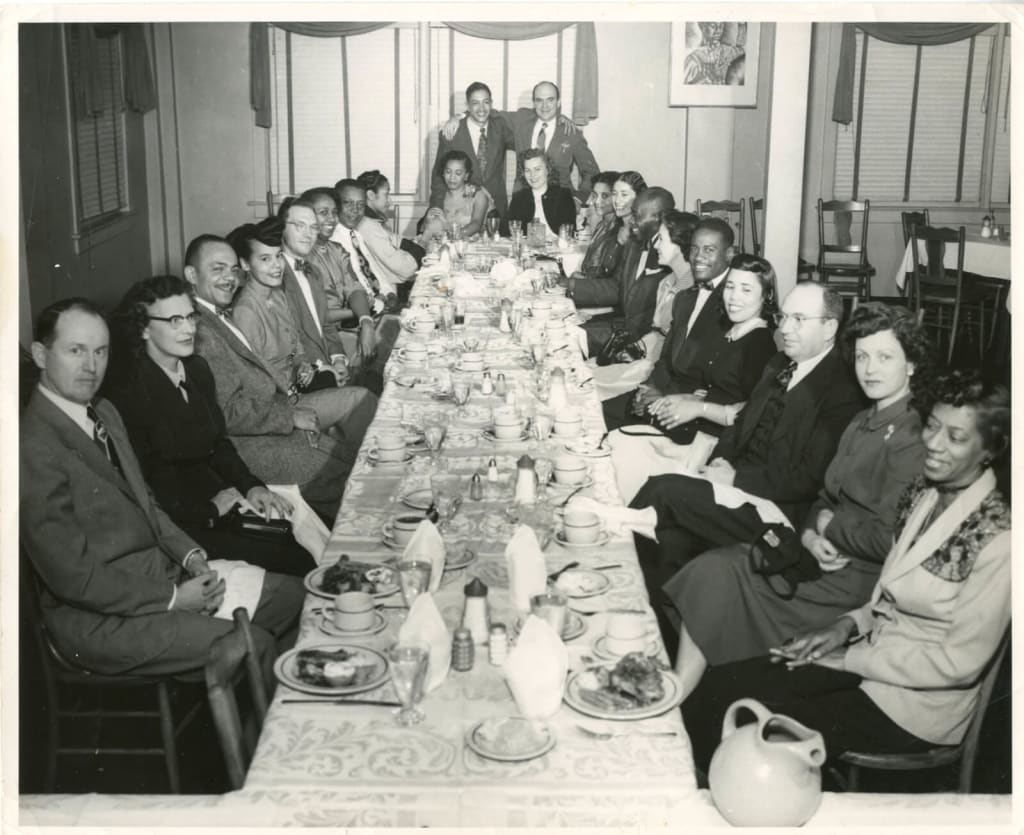
Evelyn J. Frazier fought for integration and equality at the table rather than on the front lines. Frazier and her sister opened Evelyn Jones Cafe, and in the mid-40’s, her husband, Luther Frazier, expanded it and renamed it Frazier’s Cafe Society. Located on what is now Martin Luther King Jr. Drive, Frazier’s was one of the few restaurants that seated both Black and white patrons together — a radical and dangerous concept at the time.
Coretta Scott King
An equal partner with her husband, The Rev. Martin Luther King Jr., Coretta Scott King was committed to social justice and championing the values of human dignity. Mrs. King balanced motherhood with the movement’s work, often participating in strategy meetings and encouraging and providing feedback on Dr. King’s speeches and sermons. She traveled with Dr. King around the world and met with heads of state on behalf of racial and economic justice.
Evelyn Lowery
Evelyn Lowery was on the front lines of the Civil Rights movement almost from birth, as her father was head of the NAACP in Memphis. Married to the Rev. Joseph Lowery, she participated in the Selma to Montgomery March, was shot at by the KKK during a SCLC demonstration and was instrumental in founding the SCLC/W.O.M.E.N. Inc. (Women’s Organizational Movement for Equality Now). She also helped recruit and mentor women in the movement.
Dr. Roslyn Pope
When Atlanta native Dr. Roslyn Pope was a student at Spelman College, she co-authored (with Julian Bond) “An Appeal for Human Rights.” The manifesto, which stated that Blacks deserved equal education, voting rights and the same medical treatment as whites, is credited as catalyzing the Atlanta Student Movement, promoting nonviolent protest and was responsible for direct actions taken against Jim Crow laws. The paper was critical in making a shift toward student-led, nonviolent activism in the South.
Ruby Doris Smith-Robinson
Ruby Doris Smith-Robinson worked with the Student Nonviolent Coordinating Committee from its earliest days in the 1960s, serving as an activist in the field and in the Atlanta administrative office. She eventually rose to the position of executive secretary, becoming the only woman to hold that office. As a student at Spelman College, she became involved in the Atlanta Student Movement, participated in sit-ins and was arrested a few times. She participated in Freedom Rides, organized community-action meetings and participated in economic boycotts both in Atlanta and throughout the South.
Learn more about Atlanta’s Civil Rights Legacy. Explore Atlanta Stops on the Civil Rights Trail.

Mary Welch is an award-winning writer who has reported on the maturity off Atlanta’s culinary and hospitality scene as well as its growth as a sophisticated international city. Her byline has been seen in local and national outlets such as the Atlanta Journal-Constitution, Travelgirl, Global Atlanta, and American Lawyer covering topics such as travel, business, cars, law, hospitality and education. She co-authored a book with Chuck Leavell, the keyboardist for the Rolling Stones and a Georgia tree farmer, on the future of the American forest.
Discover More
Get to know Atlanta, and discover the best things to do around the city.

