
Explore Atlanta Stops on U.S. Civil Rights Trail
Atlanta often is referred to as the heartbeat of the Civil Rights Movement. One reason for that is because so many nationally influential civil rights leaders called Atlanta home. Among those leaders were: Martin Luther King Jr. and Coretta Scott King; John Wesley Dobbs, unofficial mayor of Atlanta’s Sweet Auburn district, the heart of Atlanta’s Black community during segregation; Andrew Young, former U.S. Ambassador to the United Nations; Joseph Lowery, founder of the Southern Christian Leadership Conference; and U.S. Congressman John Lewis.
The U.S. Civil Rights Trail is a collection of churches, courthouses, schools, museum and other landmarks that played a pivotal role in advancing social justice in the 1950s and 1960s. Explore Atlanta stops on the trail.
APEX Museum
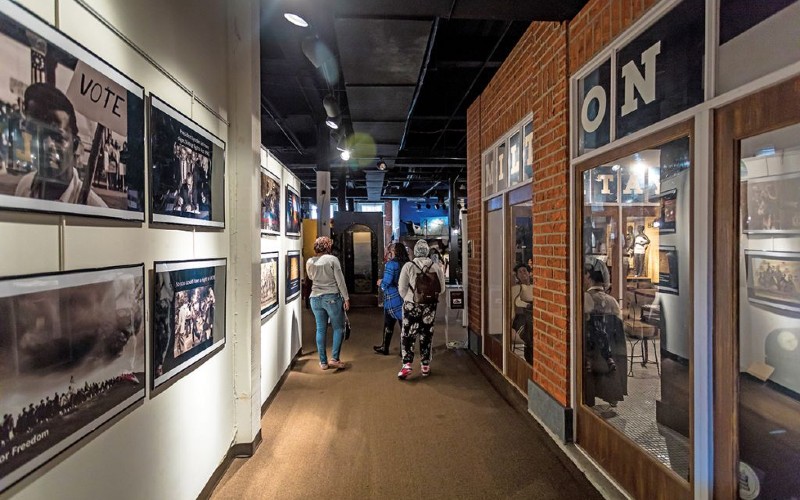
The APEX Museum (African-American Panoramic Experience) is the only museum in metropolitan Atlanta dedicated to telling stories of people of the African Diaspora. The museum provides a deeper understanding of Black history through exhibits and artifacts, plus presentations that span centuries. An example of exhibits at the museum is “Sweet Auburn Street of Pride,” which introduces Moses Amos, the first Black registered pharmacist in Georgia. Moses established the Gate City Drug Store, which became the Yates & Milton Drug store in 1922. At the museum, peer into the window of the Yates & Milton Drug Store, once a staple on Auburn Avenue. It was a showcase and meeting place where residents shared their thoughts, ideas and experiences.
Ebenezer Baptist Church

The historic Ebenezer Baptist Church is where Martin Luther King, Jr. was baptized and later became co-paster with his father, the Rev. Martin Luther King Sr. The church is located in Atlanta’s Sweet Auburn district, the center of Black life in Atlanta during segregation. When you visit, you may sit in a pew and listen to recorded sermons given by Dr. King. The church is a short walk to other stops on the U.S. Civil Rights Trail, including The King Center, Martin Luther King, Jr. National Historical Park, MLK’s birth home and Madame CJ Walker Museum/WERDStudio.
Located across the street from the historic church, the current Ebenezer Baptist Church, where the pastor is U.S. Sen. Raphael Warnock, has a congregation of more than 6,000 people.
Elbert P. Tuttle U.S. Court of Appeals Building
The United States Court of Appeals for the Eleventh Circuit is located in the Elbert P. Tuttle Courthouse at 56 Forsyth St. in Atlanta. Tuttle was chief judge of the U.S. Court of Appeals for the Fifth Circuit from 1960 to 1967 when the court became known for a series of decisions crucial in advancing the civil rights of African Americans during the Civil Rights Movement. The Court of Appeals Building was listed on the National Register of Historic Places in 1974.
The King Center

The King Center was established by Coretta Scott King in 1968. Among the things to do there, you may visit the tombs of Martin Luther King Jr. and Coretta Scott King and visit the Eternal Flame, which symbolizes the continuing efforts to realize Dr. King’s ideals for the “Beloved Community.”
If visiting in January, The King Center hosts several events leading up to MLK Day, along with the Beloved Community Commemorative Service held on MLK Day.
Jimmy Carter Presidential Library and Museum

Learn about the legacy of the 39th U.S. president, Jimmy Carter, including his upbringing in Plains, Ga., the work accomplished during his presidency and his dedication to volunteering alongside First Lady Rosalynn Carter.

At the Jimmy Carter Presidential Library and Museum, you may watch the “Day in the Life of the President” presentation to learn more about President Carter’s administration. Step into the life-size replica Oval Office and see artifacts from throughout his life including his Nobel Peace Prize. One popular exhibit, Peace Talks, focuses on the Camp David Accords.
Madame C.J. Walker Museum/WERD Studio
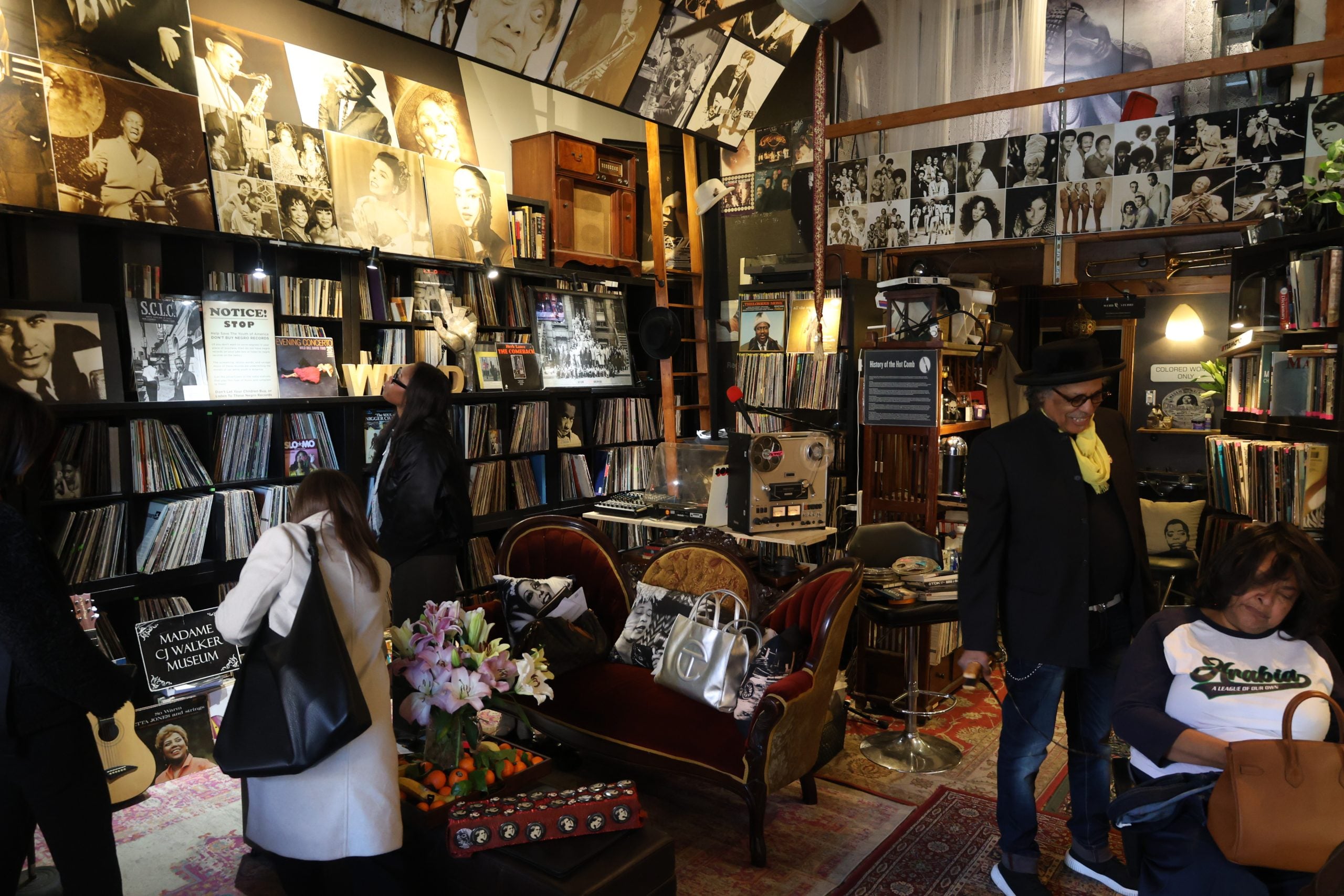
Located in the Sweet Auburn district, the Madame C.J. Walker Museum/WERD Studio pays tribute to the history and legacy of Black icons.
Madame C.J. Walker was the first female self-made millionaire in the U.S. After suffering from hair loss, she developed a line of cosmetics and hair care products for Black women. Several of her beauty tools are housed in the museum, an original Madame C.J. Walker beauty shop from the 1950s.
WERD Studio was the nation’s first Black-owned radio station, which began broadcasting in 1949. The station shared news and information about civil rights events, promoted Black-owned businesses, featured gospel music programs and eventually added jazz, blues and R&B music. Many of thousands of records in the museum were aired on WERD.
Visitors to the museum may find Ricci de Forest, owner and operator, diving deeper into the legacy of Madame Walker, and he may even quiz visitors on Black musicians from back in the day.
Martin Luther King Jr. Birth Home
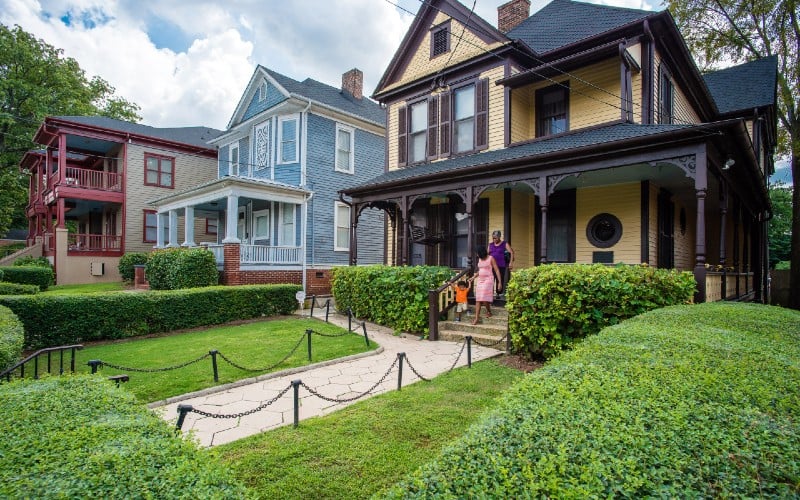
The birth home of Martin Luther King Jr., where he lived for the first 12 years of his life, is located in the Martin Luther King, Jr. National Historical Park.
When you walk in, you’ll be in the parlor, where Dr. King practiced piano. There was a game room in the home, where the family played Monopoly and Chinese checkers among other games. You will visit the dining room, kitchen and the birth room, where all three kids were born.
Note: The birth home is closed for rehabilitation until June 2026.
Martin Luther King, Jr. National Historical Park

See the Behold Monument at the Martin Luther King, Jr. Natiional Historical Park. On Jan. 11, 1990, Coretta Scott King unveiled the monument as a tribute to her late husband and as an inspiration to all who fight for dignity, social justice and human rights. The sculptor, Patrick Morelli, was inspired by the ancient African ritual of lifting a newborn child to the heavens and reciting the words, “Behold the only thing greater than yourself.”
Also at the park, you may visit the “I Have a Dream” World Peace Rose Garden, with 185 varieties of roses, an artistic interpretation of Dr. King’s ideals of peace through principals on nonviolence.
Note: The Visitors Center is currently closed for renovations with plans to reopen in fall of 2026. Visit the nearby historic Fire Station No. 6, temporary home of the visitor center. The fire station has been converted into a museum to honor its history as the first fire station in Atlanta to desegregate.
National Center for Civil and Human Rights
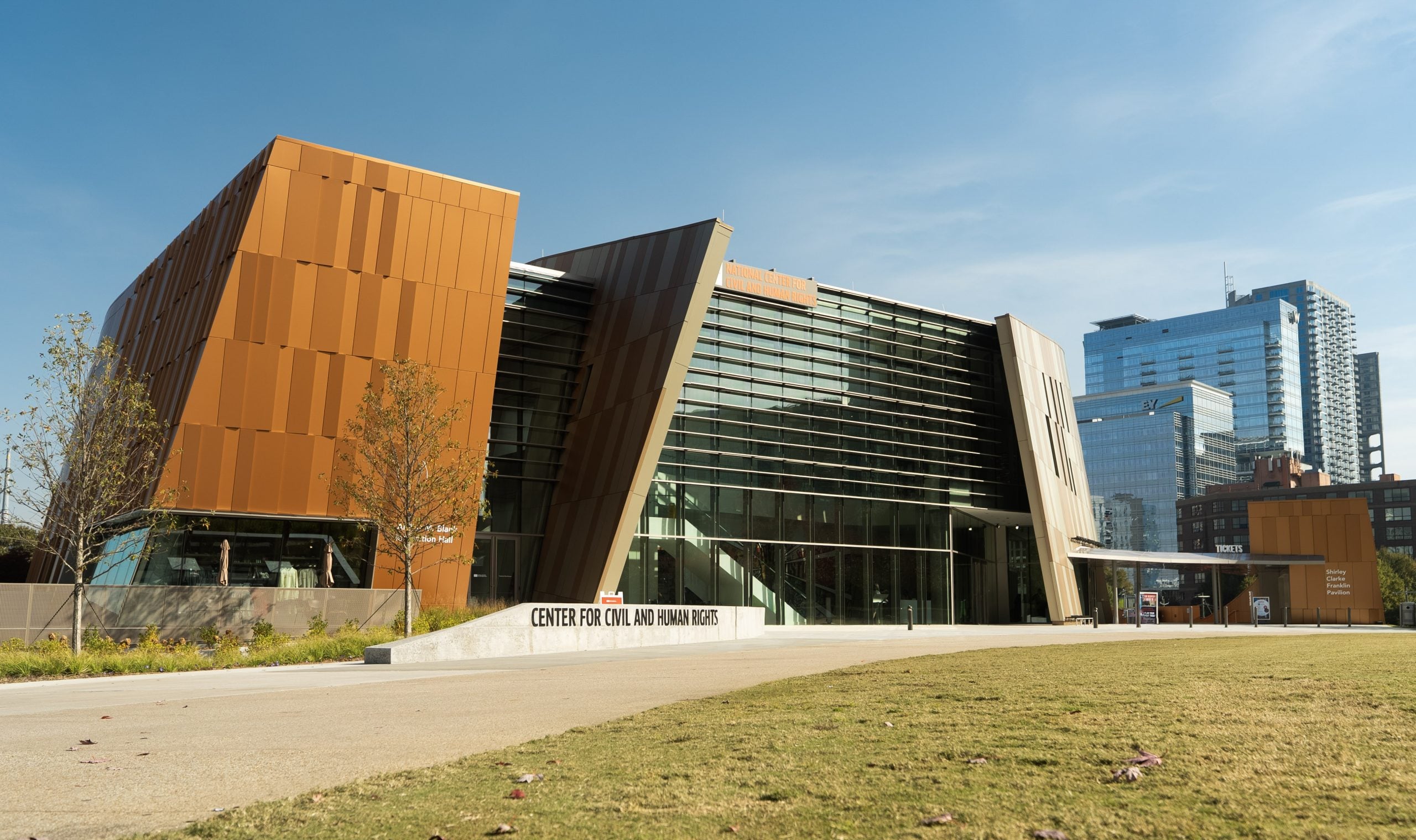
Located in downtown Atlanta, the National Center for Civil and Human Rights showcases the stories of those who have fought for freedom and also highlights changemakers of today. The first floor is dedicated to the Civil Rights Movement.
The “A Committed Life” exhibit about the legacy of Martin Luther King Jr. includes handwritten sermons, speeches and personal notes showing Dr. King’s commitment to nonviolence and equality.

In the “Rolls DownLike Water” exhibit, visitors can sit at a mock lunch counter to see and hear what people had to experience during nonviolent protests in Greensboro, N.C. Likewise, visitors can learn about contributions from women and walk through re-creations of civil rights moments, including the Freedom Rides, the March on Washington and Dr. King’s funeral.
The second floor of the museum is focused on human rights, featuring homages to those who fought for justice around the world. Discover your ethical footprint and the power you have as a consumer.
Explore more places that dive deeper into Atlanta’s impact during the Civil Rights Movement.
Discover More
Get to know Atlanta, and discover the best things to do around the city.

