
The History of Black Cuisine in Atlanta
History, Soul and the Restaurants Defining the City
Last Updated June 2, 2026
Add Discover ATL as a preferred source on Google
Atlanta is a foodie city, and no more so than in its Black cuisine, which can be found in mom-and-pop shops, BBQ joints, high-end restaurants with world-famous chefs and everything in between. But what exactly is “Black food” — and what makes it so great?
Soul food, Black food and the Black struggle in the American South are intertwined. Literally, Black dishes were born from discarded leftover food. Figuratively, it represents the struggles and triumphs of a culture and race. The food was a strong part of enslaved Black people’s identity, and Black-owned restaurants and grandma’s kitchen were the places where people could sit without fear, break bread and create bonds, memories and dreams.
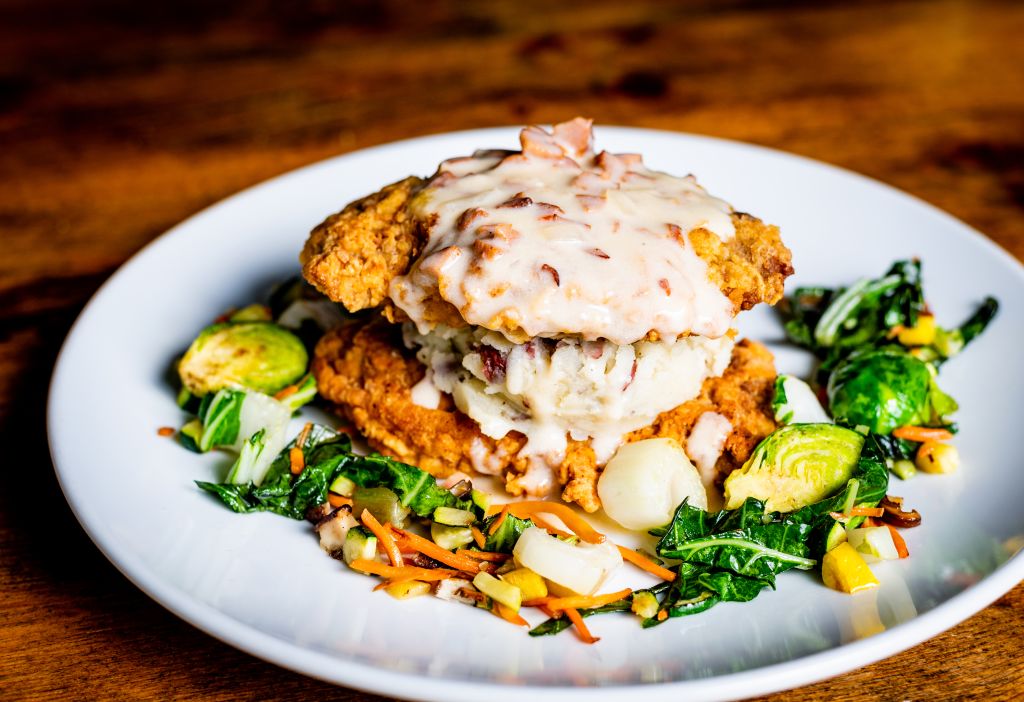
“Southern cooking is the umbrella that embraces the ingredients of the South and the many traditions of its people,” said chef Deborah VanTrece, owner of MICHELIN Guide’s Recommended Twisted Soul Cookhouse and Pours, Oreatha’s At Point and The Catering Company by VanTrece. “Soul food draws from those same ingredients, but it was born from the scraps — the throwaways, the pieces others didn’t consider worthy. Soul food emerged from necessity and the genius of transforming nothing into something nourishing, flavorful and beautiful. Southern food comes from a recipe. Soul food comes from the heart.
“Black cuisine has a history behind it,” agreed LaToya Franklyn, who, with her mother, Emily James, runs Miss Conduck, a Trinidad restaurant on Edgewood Avenue. Among its signature dishes are brown stew oxtail, curry goat and Trinidad callaloo. “It was born out of necessity. Our intention was just to eat to survive. We made the ingredients speak to us. It also speaks to the adaptability of Black people and creativity.”
Delana Winder Reeves and her husband, Jason, run Delilah’s Everyday Soul at Chattahoochee Food Works, a restaurant based on recipes by cookbook author Delilah Winder, who happens to be Delana’s mother.
“Soul food is more than just a style of cooking. It is a reflection of history, creativity and resilience,” Reeves said. “Born out of the African American experience, it represents how our ancestors took what they had and turned it into something beautiful, flavorful and sustaining. Every dish carries a story: of survival, of family, of making a way out of no way.”
Where did it come from?

Where did it come from? Here, there and everywhere. But let’s start with Africa, where foods such as African rice, okra, watermelon, yams and cowpeas flourished. When the slave trade began, mainly from West and Central Africa, enslaved people brought their relationship with the land and its bounty with them. It was a way to eat but also to preserve their culture and not give in to their circumstances — a sort of quiet resistance.
Award-winning chef Todd Richards published a book in 2024 tracing the roots of Black cooking: “Root, Heart, Soul: The Story, Celebration and Recipes of Afro Cuisine in America.” He followed the trail of African diaspora cooking, traced the influences of New York, Chicago and New Orleans, and showed how cuisines of non-Black groups found their way into Black cooking. In addition, he showed that the same dish can take on a variety of forms based on location and family tradition.
“All of this food didn’t come from an island,” said Robert Butts, chef and co-owner of Auburn Angel, who melds rich Southern traditions with global influences. Auburn Angel offers up such dishes as the hoe cake and potlicker, potato milk bread and spot-on seafood croquettes. “It came to America from Africa, but also from Jamaica and other countries. We created our food using any crop we had — field greens, collards. Growing up, we didn’t have oxtails. We had pigs, and we ate pork belly, pig’s feet, ears.”

Duane Nutter, executive chef and owner of Southern National, which is often found on Atlanta’s “Best Restaurant” lists, would agree. “You can put an oxtail on pappardelle pasta and pizza, and some people get weird about it because it’s territorial. Oxtail is more Caribbean, where they put it more in stews or soup, or mix it with tripe.”
By the way, he’s not kidding about oxtail on pizza. If you want to try it, go to the Atlanta Municipal Market, stop by Phew’s Pies and order the Oxtail & Ricotta. He also melds Southern flavors into his Neapolitan-style pizzas with his lemon-pepper wet pizza.
Nutter, who was raised in Louisiana, grew up with a little Italian in his soul food because his grandmother cleaned an Italian family’s house. “She would see them make chicken cacciatore and come home, add pig’s feet and make it our own.”
Traditional or New?
Want a “meat ’n 3” — a traditional soul meal with one protein and three vegetables, with at least one of them cooked in fatback? The type of food grandma made. They were usually found in small, female-run eateries with a cafeteria line of meats and vegetables, plus cobbler and pie for dessert.

Places like those are still around; they’re a little hard to find, but worth the effort. There are others that are a little more upscale but true to the cuisine. One of our most famous ones is the MICHELIN Bib Gourmand Busy Bee Cafe, which was established in 1947 by Lucy Jackson. This Vine City restaurant in Downtown welcomes locals and celebrities alike who relish eating fried chicken, chicken & waffles, black-eyed peas and fried okra.
Paschal’s, located in the Castleberry Hill Arts District, also in Downtown, dates back to 1947 (originally on West Hunter Street), and still serves down-home fried chicken. Paschal’s is firmly rooted in Atlanta history as one of the main locations where the Black leaders, such as Dr. Martin Luther King Jr., Andrew Young and Rep. John Lewis, dined with the white establishment to discuss how to guide the city through integration. They would meet only in Black-owned restaurants.
Other places to try are Gocha’s Breakfast Bar on Cascade Road, K& K Soul Food on Donald Lee Hollowell Parkway, Auntie Vee’s Kitchen at the Municipal Market and Virgil’s Gullah Kitchen & Bar, with three locations, where you will enjoy Gullah Geechee-flavored dishes.
In recent years, there has been an influx of Caribbean restaurants, and even more lately, African ones, that have stirred up the proverbial Black cooking pot. Atlanta is now celebrating the full spectrum of the African diaspora — from Afro-Caribbean, Afro-Latino, Afro-European, Afro-Asian to African and, in the process, is reshaping the city’s dining landscape with creativity and cultural depth.
Atlanta has some amazing Caribbean and African restaurants coming onto the scene, including Verdure Kitchen & Cocktails, an upscale restaurant serving Western and African dining. Led by Chef Jean Louis Sangare, the restaurant serves such African specialties as Suya Lamb Loin, Kedjenou de Moules and Tanzanian Chips Mayai.
Over at the Atlanta Municipal Market, stop over at Afrodish, where a family from Ghana serves native dishes with a Caribbean touch. Enjoy curry, spicy goat, steamed cabbage and Jamaican beef patties.
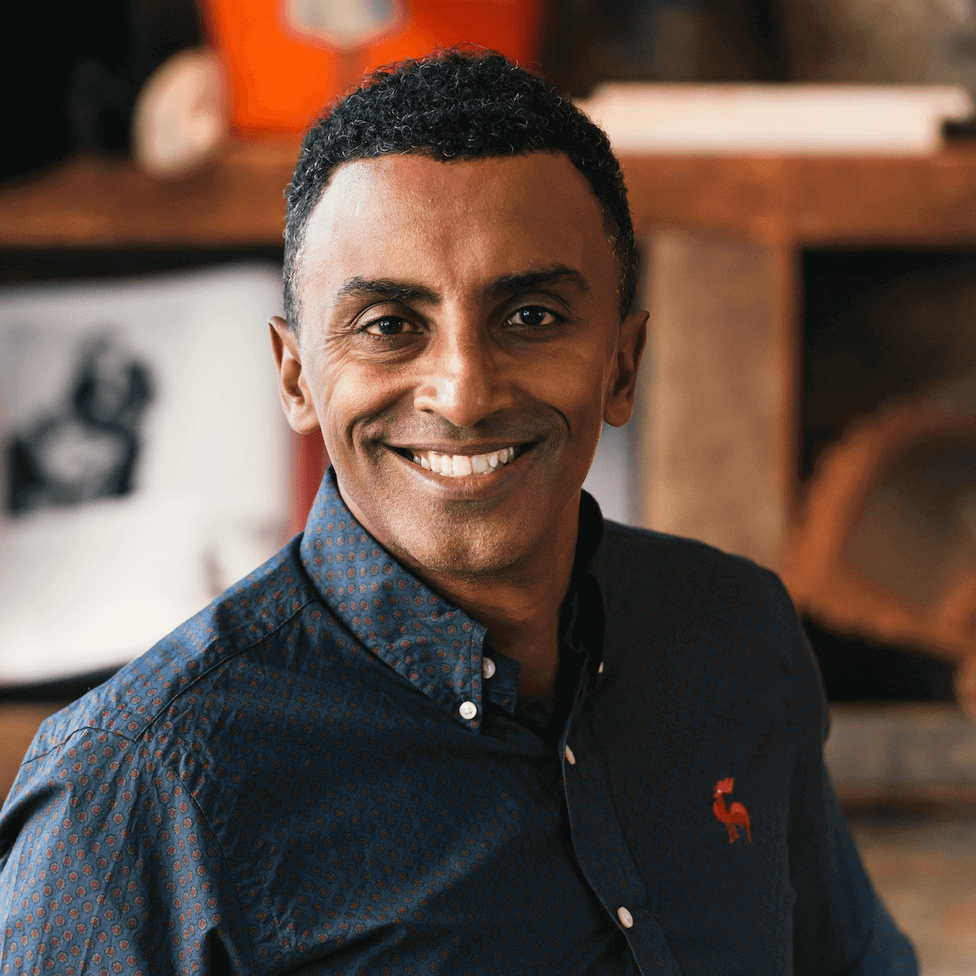
There are several Ethiopian restaurants, including Desta Ethiopian Kitchen. Internationally renowned chef Marcus Samuelsson, who was born in Ethiopia and raised in Sweden, has brought his culinary magic to restaurants around the world, including Marcus Bar & Grille on Edgewood. Among his offerings are big boi pot, Bankhead jambalaya, rice and peas, Mahindi Choma (grilled corn) and slow-cooked greens.
Besides Miss Conduit, other outstanding Caribbean restaurants include Jerk Cuisine ATL and Spice House Midtown. Tassili’s Raw Reality is a vegan restaurant in the West End, where the cuisine is rooted in the Thematic 42 Laws of Ma’at and the Seven Nguzo Saba principles. The restaurant’s emblem is designed from the Sankofa heart of Ghana, West Africa, meaning “go back and bring it forth.”
Keeping it Real
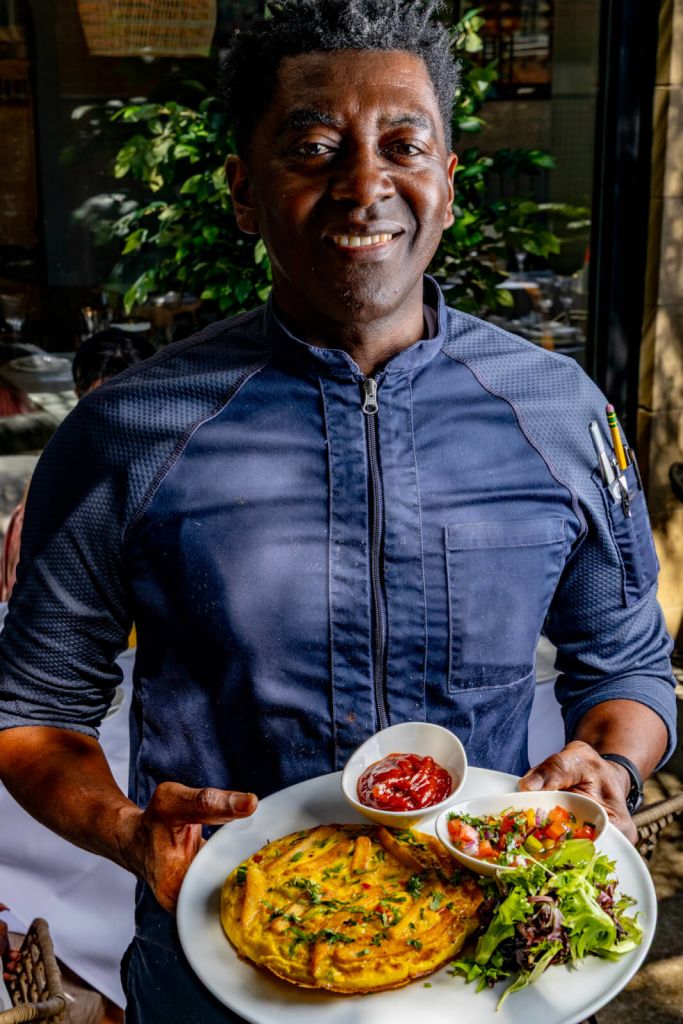
As Atlanta’s soul food and Southern cuisine meet their cousins across the diaspora, the essence of soul cooking remains. Chefs are still staying true to the flavor, comfort and creativity. “It’s jolly rice meeting dirty rice, jerk seasoning finding its way into fried chicken and plantains sitting next to collard greens. It’s not fusion for the sake of a trend; it’s cultural dialogue on a plate,” said Delana Winder Reeves.
Atlanta’s chefs may be “pushing the envelope,” said Duane Nutter. “You might have someone serving catfish with miso broth and collards. It’s not taboo; just elevated,” he said.
One change is that soul food is moving toward healthier version.s “Stuffed catfish is not just fried and hot sauce,” said chef Dene Lynn. “Fat is not the compelling flavor. You can see that in the vegan and vegetarian dishes. You don’t need meat in your green beans. You can change the flavor while remaining constant to the tradition.”
No matter a dish’s origin, one universal cooking truth is that it is based on a wide range of elements resulting in a deep, layered seasoning. “Flavor is everything. Historically, African Americans learned to season with intention and creativity, because those bold flavors helped transform and elevate the off-cuts and throwaway pieces they were given,” said VanTrece. “What began as a way to mask inferior ingredients became a proud tradition of turning struggle into brilliance, making every bite rich, soulful and unforgettable. In my kitchen, you’ll find a plethora of peppers, onions, garlic, celery, along with herbs and a collection of spices that span the globe.”
Auburn Avenue’s Butts agrees. “Southern cooking is not forgetting the steps and taking your time. Every ingredient needs to build up the flavor. You slowly add the peppers, onions and garlic. You sear the meat. It takes time.”
The Secret Ingredient

Soul food is well named. It comes from the soul and connects Black people to their past and to each other. It’s a way of remembering and celebrating where they came from, and of passing it on to the next generation to nurture, cherish and carry forward.
“Black cuisine represents our memories, our struggles and our history. It reminds us of the journey, struggles, sacrifices and triumphs that have shaped who we are,” said VanTrece. “In a time when the Black American experience is being challenged and our history risks being erased, it is imperative that we hold on to every piece of it; the lessons, the legacy and the greatness of our ancestors. Through food, we continue to show our resistance.
“From the brown paper bags filled with sandwiches carried along the Underground Railroad to the strategic gatherings of leaders like Martin Luther King Jr. and Malcolm X in Black-owned restaurants and home kitchens, food has always been at the heart of our resilience. It has sustained our bodies, fortified our spirits and bound our communities together in the ongoing fight for freedom and dignity,” VanTrece said.
Black people are a collection of cultures, traditions and languages, and that diversity is their strength. “Here, in Atlanta, the Black community represents people from all over the world. It’s a true reflection of the African diaspora-vibrant, varied and ever changing,” said VanTrece. “Atlanta, often called ‘the city too busy to hate,’ is the perfect backdrop for us to expand our culinary horizons and learn from one another. We are a city rooted in activism, fellowship and creativity. That spirit flows into the kitchen, where chefs and home cooks alike are reimaging what Black food can be. The diaspora doesn’t divide us; it deepens us. It makes our community and our city that much stronger. “
Discover some of Atlanta’s Black-owned restaurants.

Mary Welch is an award-winning writer who has reported on the maturity off Atlanta’s culinary and hospitality scene as well as its growth as a sophisticated international city. Her byline has been seen in local and national outlets such as the Atlanta Journal-Constitution, Travelgirl, Global Atlanta, and American Lawyer covering topics such as travel, business, cars, law, hospitality and education. She co-authored a book with Chuck Leavell, the keyboardist for the Rolling Stones and a Georgia tree farmer, on the future of the American forest.
Originally Published February 19, 2026
Discover More
Get to know Atlanta, and discover the best things to do around the city.

