
The 1996 Olympics and the Creation of Centennial Olympic Park
How Atlanta Turned a Dream Into a Downtown Landmark
Published September 21, 2026
Add Discover ATL as a preferred source on Google
At a Glance:
- Centennial Olympic Park opened for the 1996 Olympic Games and turns 30 in 2026.
- More than 21 acres of Downtown land had to be acquired from 50 owners to build the park.
- More than 330,000 engraved bricks helped fund the park’s construction.
- The park cost $48 million and was designed to outlast the Olympics.
- Today, Centennial Olympic Park hosts free events and remains a gathering place for locals and visitors.
- Its Olympic legacy lives on through the Fountain of Rings, public art and commemorative quilts.
In “Field of Dreams,” Kevin Costner looked out at acres of corn and envisioned a baseball field that would bring people together.
A Dream for Downtown Atlanta
In 1994, Billy Payne, president and chief executive officer of the Atlanta Committee for the Olympic Games, looked out of his high-rise office building at an urban blighted mishmash of small businesses, parking lots and abandoned buildings. But in his head, he saw a large park that would unite visitors and residents alike as they cheered on and celebrated the 1996 Summer Olympics in Atlanta. In both cases, they built it, and they came.
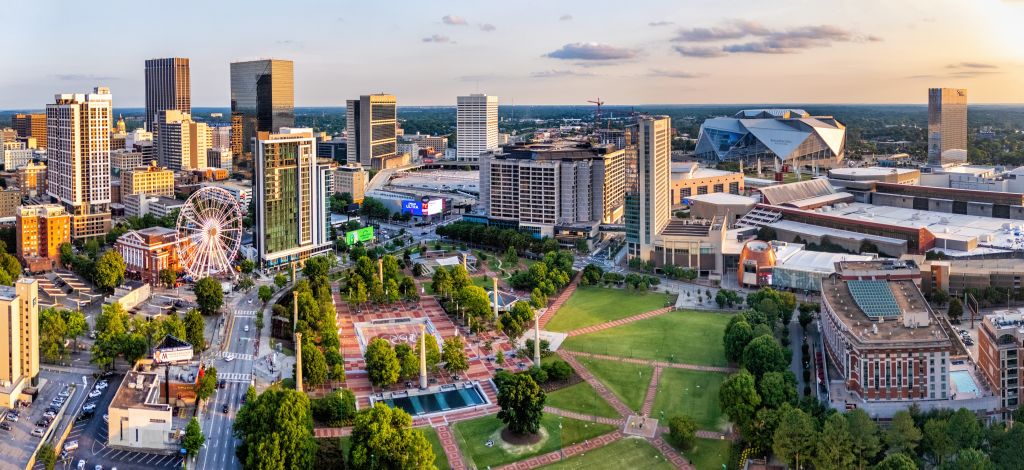
And 30 years later, Centennial Olympic Park is still an anchor location for locals, tourists — and most recently 2026 FIFA World Cup supporters — to get fresh air, join communal events and just enjoy Atlanta.
Building the Park Wasn’t Easy
One big difference between Costner’s character and the Olympic Committee was that Costner owned the cornfield; Atlanta did not. The committee had to acquire more than 21 acres from 50 owners. That’s not as easy as one might think.
Another roadblock was that many Olympic Committee members saw urban blight, not Atlanta’s future Central Park and deemed it a waste of valuable time and money.
Atlanta Bought Into the Vision

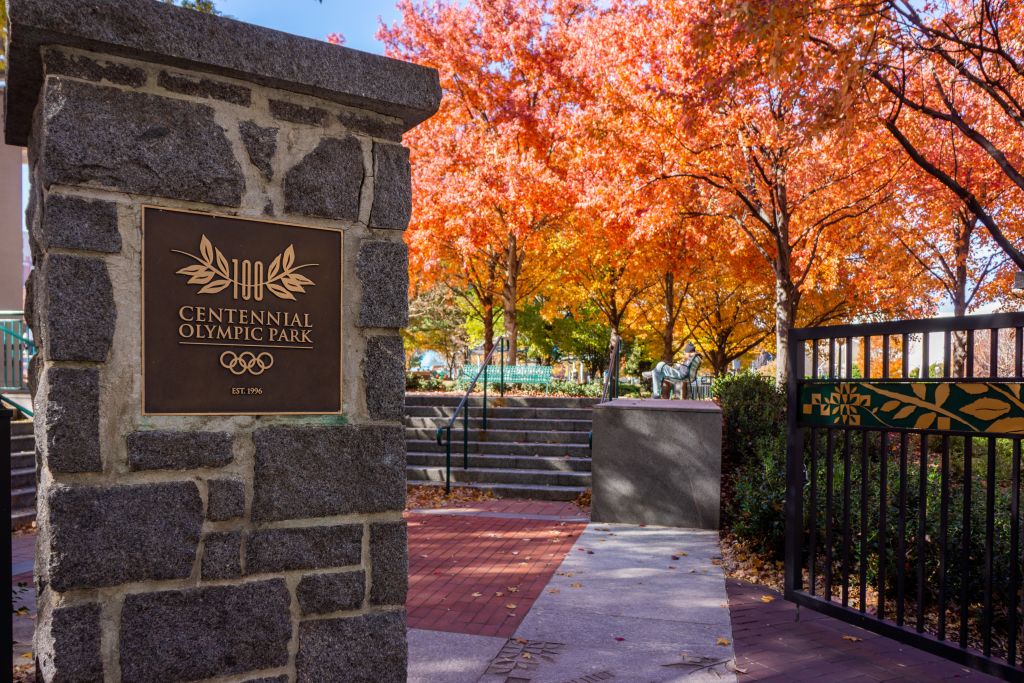
And, to top it off, there were no public tax dollars for this last-minute project. Payne teamed up with former U.N. Ambassador Andrew Young and shook the money tambourine from Atlanta’s corporations and foundations, including the Woodruff Foundation. Atlantans bought into it as well — literally — by purchasing inscribed bricks for $35; more than 330,000 bricks were sold by the start of the Games. Those bricks are still there, and families and individuals delight in going to the park, finding out their brick and maybe taking a selfie by it.
But most recently those selfies were taken by the hundreds of thousands who came Downtown to support their team during the 2026 FIFA World Cup games — or who just wanted to be part of the World Cup soccer celebratory atmosphere.
Building a Legacy Beyond the Olympics

Those World Cup fans had no idea how challenging it was to create Centennial Olympic Park 30 years ago. Payne and Ambassador Young had to get the team—especially lawyers— on board to acquire the land and design a park. H.J. Russell and Co. did the work, whose founder, Herman Russell, was one of the city’s top minority contractors. The park was built in two phases, costing a total of $48 million, and the plan was not just to have it be for the Olympics with tents, entertainment stages, temporary exhibitions and souvenir stations, but to become a cornerstone of downtown Atlanta after the Olympics.
They imagined a large green space where Downtown workers and visitors could relax during lunch or after work and where children could play. They dreamt of concerts and festivals that would bring people together Downtown again. It may not have been on their vision board, but the park often served as a backdrop for reporters, especially those working at CNN, formerly located across the street.
But dreams have to be realized and, amazingly, it all came together, and Centennial Olympic Park was ready just days before the Games opened.
From Olympic Venue to Downtown Gathering Place
But that was 30 years ago, and today is today. The park is now under the stewardship of the Georgia World Congress Center Authority, and throughout the year free family-friendly events bring families and friends down to hear live performances, purchase gifts from vendors and enjoy culinary treats from local food trucks.
The Olympic Legacy Lives On

But the park’s origins are not forgotten. Throughout the 22 acres, the Olympic legacy lives on and is celebrated.
Probably the most photographed part of the park is the Fountain of Rings, where stunning water displays are synchronized with music and a dazzling light show. In the summer, it draws children to splash around in the water — as we say in the South — like a moth to a flame.
Art, History and Olympic Memories

The park is also an outdoor art museum with works located throughout the park. The Gateway of Dreams, a statue designed by Raymond Kaskey, honors Baron Pierre de Coubertin, the founder of the modern Olympics and the International Olympic Committee. The Quilt of Origins, created by Peter Calaboyias, shows three figures from different Olympic eras. The Quilt of Olympic Spirit honors the 10,000 athletes who competed, with their names etched into the surrounding stones, including Andre Agassi, Mia Hamm and Floyd Mayweather Jr.
The Quilt of Nations pays tribute to the 197 participating countries, while the Quilt of Dreams honors the visionaries who brought the games to Atlanta. Finally, the Quilt of Remembrance features a mosaic of stones from around the world to recognize the 11 people injured by the Centennial Olympic Park bombing and honor guard Richard Jewell, who helped save lives.
Paralympic Place and Paralympic Legacy salute the 3,310 participating Paralympic athletes from 104 countries who broke 268 world records.
A Catalyst for Downtown Atlanta

Part of Payne and the Olympics committee’s dream was that the park would serve as a catalyst to spur further development Downtown, and that dream is alive and well. Several hotels and restaurants have opened and small businesses are thriving. The SkyView Atlanta Ferris wheel rises 200 feet above the park, giving the best view. Also ringing the park are three of the city’s signature museums — the World of Coca-Cola, the Georgia Aquarium, the Chick-fil-A College Football Hall of Fame and the National Center for Civil and Human Rights. Across the street is the Children’s Museum of Atlanta.
In 1989, “Field of Dreams” was made on a $15 million budget and to date has earned almost $90 million. Built 30 years ago on a modest budget and big dreams, Centennial Olympic Park today is visited by millions every year and has helped revitalize that part of downtown Atlanta.
In Atlanta, as in the movies, if you dream it, they will come.
Explore downtown Atlanta and experience it all around Centennial Olympic Park.

Mary Welch is an award-winning writer who has reported on the maturity off Atlanta’s culinary and hospitality scene as well as its growth as a sophisticated international city. Her byline has been seen in local and national outlets such as the Atlanta Journal-Constitution, Travelgirl, Global Atlanta, and American Lawyer covering topics such as travel, business, cars, law, hospitality and education. She co-authored a book with Chuck Leavell, the keyboardist for the Rolling Stones and a Georgia tree farmer, on the future of the American forest.
Discover More
Get to know Atlanta, and discover the best things to do around the city.

